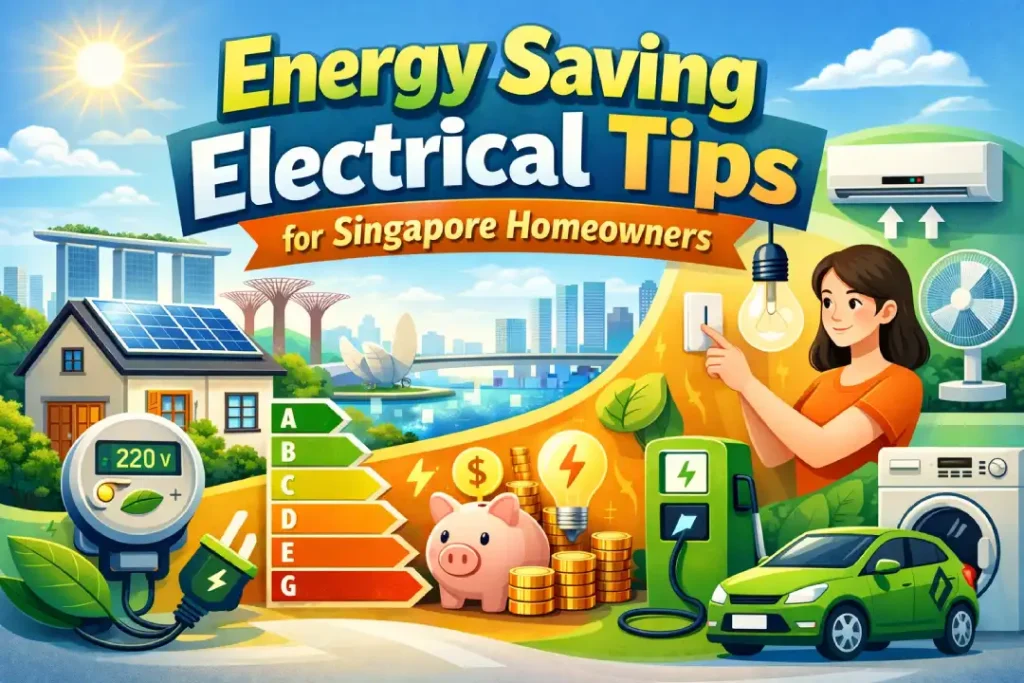
Many Singaporeans feel frustrated by high SP Group utility bills, especially during the hot weather when it’s hard to turn off the aircon. The main issue for most homeowners is the surprise of high bills due to heavy appliance use, with things like water heaters and cooling systems quietly draining money. Our Energy Saving Electrical Tips go beyond basic advice to help you reduce energy consumption without sacrificing comfort. We’ll show you how to spot “phantom” power drains and optimize your appliances, turning your home into an energy-efficient space that stays cool and saves you money.
Understanding Energy Consumption in Singapore Homes
Before we explore practical energy-saving tips, it’s important to understand why energy efficiency matters in Singapore and how electricity is typically consumed in local households. With hot and humid weather year-round, air conditioning is a major source of energy consumption, contributing significantly to monthly electricity costs.
Why Energy Efficiency Matters for Singapore Homeowners
As energy costs continue to rise, Singapore homeowners are looking for ways to save money on their utility bills while doing their part for the environment. The government has long promoted energy efficiency through various incentives and programs aimed at reducing national electricity demand. This push for efficiency also aims to decrease the environmental impact of high energy usage. By embracing energy-efficient practices at home, you not only help reduce your electricity bills but also align with national sustainability goals.
Furthermore, the growing availability of energy-efficient products and smart technology makes it easier than ever to reduce energy consumption. Switching to more efficient appliances, adopting new habits, and utilizing government rebates can all contribute to significant savings. These energy-saving practices are not just a trend, they’re part of an ongoing shift toward more sustainable living, and homeowners in Singapore can be a crucial part of this change. The Singapore government has long promoted energy efficiency; you can monitor your consumption and compare it to the national average through the SP Group utilities portal.
How Electricity Is Consumed in Singapore Homes
Energy consumption in Singapore homes is largely dominated by air conditioning, lighting, and home appliances. The air conditioner is typically the most energy-hungry appliance in a Singapore household, accounting for up to 40% of total energy use. The combination of high temperatures and humidity makes air conditioning a necessity for comfort in most homes.
Lighting also contributes significantly to energy usage, often accounting for around 15-20% of a household’s total consumption. Refrigerators, water heaters, and washing machines are also common energy consumers. With such high energy demand from these appliances, it’s clear that small changes in how we use these devices can have a big impact on our overall energy consumption.
By understanding the major contributors to energy consumption in your home, you can begin to target the areas where changes can lead to the greatest savings.
Top Energy-Saving Electrical Tips for Singapore Homeowners
Here’s some practical tips that Singapore homeowners can implement to reduce electricity consumption. These energy-saving strategies focus on improving the efficiency of common household appliances and introducing smarter habits.
1. Upgrade to Energy-Efficient Appliances
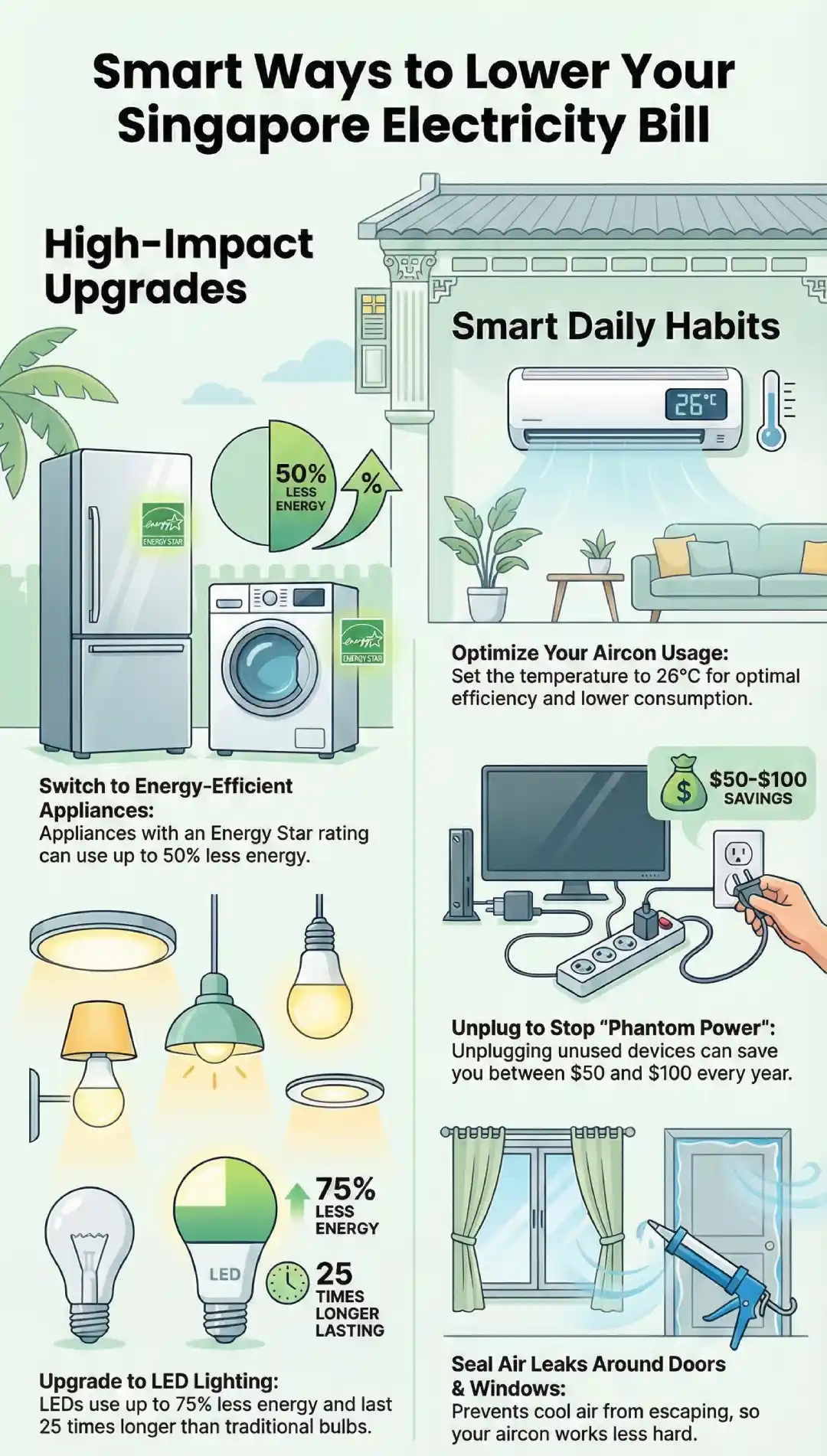
One of the most effective ways to reduce electricity consumption is by upgrading to energy-efficient appliances. Many modern appliances come with an Energy Star rating, which signifies that they meet high efficiency standards. These appliances use advanced technology to consume less energy while still delivering the same level of performance as older models.
For example, Energy Star-rated refrigerators, washing machines, and air conditioners can use up to 50% less energy than older, conventional models. While these appliances might come with a higher initial cost, the savings on your electricity bills over time will quickly offset that investment. Over the course of a few years, energy-efficient appliances can save you hundreds of dollars annually. This investment in energy-efficient home appliances is a great long-term strategy for both reducing costs and supporting a more sustainable lifestyle. While energy-efficient models are a great start, ensuring they are integrated correctly into your home’s load system is vital; our team provides professional electrical installation in Singapore to help you transition safely.
2. Switch to LED Lighting
Lighting is another area where you can achieve significant savings with minimal effort. Traditional incandescent light bulbs are incredibly energy-inefficient, converting only a small percentage of energy into light, with the rest being wasted as heat. In contrast, LED lights are highly efficient, using up to 75% less energy and lasting up to 25 times longer than traditional bulbs.
Switching all the light bulbs in your home to LED can result in substantial savings on your electricity bill. The upfront cost of LED bulbs may be slightly higher, but the long-term savings on your energy bills and the reduced need for replacements make them a worthwhile investment. Moreover, LED lights are available in a range of brightness levels and colors, making it easy to find the right light for every room in your home.
3. Optimize Aircon Usage
Air conditioning is a necessity in Singapore, but it is also one of the largest contributors to electricity consumption. By making small adjustments to how you use your air conditioner, you can reduce your energy consumption significantly. One of the easiest changes is to set your air conditioner to 26°C, the recommended temperature for optimal energy efficiency. Lowering the temperature too much wastes energy and puts unnecessary strain on the system.
You can also use smart thermostats to better control your aircon settings. These devices allow you to set schedules, ensuring that your air conditioner only operates when needed. This prevents the aircon from running unnecessarily, such as during the night or when you’re not at home. Another important tip is to have your air conditioning unit serviced regularly. A well-maintained aircon unit runs more efficiently, uses less energy, and lasts longer.
4. Reduce Standby Power (Phantom Power)
Many appliances in your home continue to consume electricity even when they’re turned off. This is called standby power, and it accounts for a significant amount of energy consumption. Devices such as televisions, microwaves, computers, and chargers all consume power while in standby mode, draining electricity without being used.
To reduce standby power, simply unplug devices when not in use, or use smart power strips that automatically cut off power to multiple devices when they’re not in use. This simple step can help you save anywhere from $50 to $100 per year, depending on how many devices you leave plugged in. Eliminating standby power is an easy and effective way to reduce energy waste in your home.
5. Seal Air Leaks & Insulate Your Home
Proper insulation and sealing air leaks are key to maintaining a cool, energy-efficient home. In Singapore’s hot climate, air leaks around doors, windows, and ducts can cause your air conditioning to work harder, increasing your energy bills. Sealing these leaks will help your air conditioner maintain the desired temperature without having to run continuously.
Adding insulation to your home, especially in the ceiling and walls, is another effective way to reduce cooling costs. Insulation helps to keep your home cooler in the hot weather, reducing the load on your air conditioning system. Electrical safety tips are crucial to keep your workplace protected from electrical accidents. Even simple actions like applying weatherstripping to doors and windows can make a significant difference. These small investments in home insulation can lead to long-term savings and a more comfortable living environment.
Energy-Saving Tips for Specific Household Appliances
When it comes to saving electricity, it’s crucial to focus on individual household appliances. Many common appliances contribute heavily to your energy bills, but with the right strategies, you can reduce their energy consumption without sacrificing performance. Below are some tips for saving electricity on specific appliances found in Singapore homes.
1. Air Conditioners
Air conditioning is one of the largest energy consumers homes, particularly during the hot, humid months. While air conditioning is essential for comfort, there are several ways to make your cooling system more energy-efficient.
- Set the Aircon to 26°C: As mentioned earlier, the recommended setting for air conditioners is 26°C. At this temperature, the air conditioner is still effective in cooling the room, but it doesn’t have to work as hard as it would at lower temperatures. Every degree lower can increase your energy consumption by up to 6-8%.
- Use Ceiling Fans in Combination with Aircon: Instead of cranking up your air conditioning to the lowest setting, use a ceiling fan to help circulate the cool air. This allows you to set the air conditioner at a higher temperature and still stay comfortable.
- Regular Maintenance: A dirty or poorly maintained air conditioner uses more electricity to cool your home. Ensure that you clean or replace filters regularly and have your unit serviced annually. Aircon servicing can improve efficiency by up to 30%.
- Consider Energy-Efficient Models: If your aircon is old, consider upgrading to a more energy-efficient model. Modern air conditioners come with advanced features like inverter technology, which adjusts the cooling power according to the room temperature, leading to significant energy savings.
2. Refrigerators
The refrigerator is another key appliance in your home that uses a considerable amount of energy. Here’s how you can optimize its use:
- Set the Right Temperature: The ideal temperature for a refrigerator is between 3°C and 5°C, while the freezer should be set at -18°C. Temperatures lower than this waste energy.
- Don’t Overload Your Fridge: A packed refrigerator has to work harder to maintain its temperature. While you want to keep food cool, avoid overcrowding, as this can block air circulation and cause the fridge to use more energy.
- Keep the Door Closed: Every time the refrigerator door is opened, cool air escapes, and the fridge has to work harder to bring the temperature back down. Be mindful of how long the door is open when retrieving food, and try to avoid unnecessary door openings.
- Regular Cleaning: Clean the coils at the back of the refrigerator. When the coils are dirty, the refrigerator has to work harder to cool down, using more energy in the process. Cleaning the coils at least once a year will improve the fridge’s efficiency.
3. Water Heaters
In Singapore, water heaters are frequently used for showers and other hot water needs. Since water heating accounts for a significant portion of your household’s energy consumption, it’s important to use your water heater efficiently.
- Set Your Heater to the Right Temperature: Many homeowners set their water heater temperature much higher than necessary. For most purposes, a temperature of 60°C is sufficient. Lowering the temperature by just a few degrees can significantly reduce your energy usage.
- Install a Timer: Install a timer on your water heater so it only runs during peak hours when hot water is needed, such as in the morning and evening. This helps avoid the continuous heating of water throughout the day.
- Use Solar Water Heaters: If possible, consider installing a solar water heater. Solar water heating is an energy-efficient solution that can save up to 70% on your water heating costs in the long run.
4. Washing Machines & Dryers
Laundry can consume a large amount of electricity, especially when using a washing machine and dryer. Here are some ways to cut down on energy use when doing laundry:
- Use the Right Cycle: Always choose the cold wash option when possible, as heating water consumes a lot of energy. Most modern detergents are formulated to work effectively in cold water.
- Full Loads: Only run the washing machine and dryer with a full load. Running smaller loads wastes electricity because the machine is still using the same amount of energy per cycle.
- Use an Energy-Efficient Washing Machine: Like refrigerators and air conditioners, washing machines are now available in energy-efficient models. These machines consume less water and energy, helping to reduce both water and electricity bills.
- Air Dry Clothes: Whenever possible, dry your clothes outdoors using a clothesline instead of a clothes dryer. The sun is a natural and free drying agent that saves both energy and money.
5. Ovens & Stoves
Cooking can also be a big energy drain, but there are ways to cut back on electricity use in the kitchen.
- Use the Right Pot for the Right Burner: Ensure that you match the size of the pot to the size of the burner. Using a small pot on a large burner wastes energy. Similarly, using a lid while cooking helps retain heat and cook food faster, reducing energy consumption.
- Convection Ovens: If you’re in the market for a new oven, consider purchasing a convection oven. These ovens use fans to circulate hot air, cooking food faster and more evenly, which leads to less energy usage.
- Avoid Preheating: Unless your recipe specifically calls for it, avoid preheating your oven. Many dishes can cook effectively without preheating, which helps you save energy.
- Cook More Efficiently: Whenever possible, cook large batches of food and reheat leftovers rather than cooking small amounts multiple times. This reduces the frequency with which your oven or stove is turned on.
Common Mistakes Homeowners Make That Increase Energy Bills
Even with the best intentions, homeowners can unknowingly make mistakes that increase their energy consumption. Let’s take a look at some common electrical mistakes and how to avoid them:
Mistake #1: Leaving Appliances on Standby
Leaving appliances like TVs, computers, and microwaves in standby mode is one of the most common energy-wasting habits. These devices continue to draw power even when they are not being used. The solution is simple: unplug devices when not in use, or use smart power strips to cut power to multiple devices at once.
Mistake #2: Overusing Air Conditioning
Air conditioning is essential in Singapore’s climate, but it’s easy to overuse it. Setting the temperature too low or leaving the aircon running when you’re not at home increases energy consumption unnecessarily. Instead, set your air conditioner to 26°C, use fans to circulate air, and make sure to turn it off when not needed.
Mistake #3: Ignoring Maintenance
Regular maintenance of appliances is essential for ensuring they run efficiently. Ignoring maintenance, such as cleaning filters or servicing air conditioners, can lead to equipment malfunction and higher energy consumption. Schedule annual maintenance to keep your appliances in top working condition.
Mistake #4: Not Upgrading to Energy-Efficient Appliances
If you’re still using old, inefficient appliances, you could be wasting a lot of energy. Older refrigerators, washing machines, and air conditioners can use up to 50% more energy than modern, energy-efficient models. Upgrading to Energy Star-rated appliances may require an initial investment, but the savings on your electricity bills will quickly pay off.
Frequently Asked Questions
How much can I save by switching to energy-efficient appliances in Singapore?
Switching to energy-efficient appliances can save homeowners $100 to $500 per year depending on the appliances upgraded. While the initial cost may be higher, the long-term savings in energy bills will quickly offset the investment.
What is the best temperature for air conditioning in Singapore?
The optimal temperature for air conditioning is 26°C. This setting provides sufficient cooling while minimizing energy consumption. Each degree lower can increase energy use by 6-8%.
How do I compare electricity retailers in Singapore?
To compare electricity retailers, consider factors like pricing, contract terms, and customer service. Websites like SP Group allow homeowners to review available plans and find options with better rates and green energy plans.
Are there government rebates or incentives for energy-saving upgrades?
Yes, the government offers programs like the Energy Efficiency Fund (E2F) to help homeowners with energy-efficient upgrades. Check with local authorities or retailers for eligible rebates and discounts on energy-saving appliances.
How can I reduce standby power consumption?
To reduce standby power, unplug devices when not in use or use smart power strips that cut off power automatically. This simple step can help save $50 to $100 annually.
Conclusion
Reducing your electricity usage and lowering your monthly energy bills is entirely possible with the right approach. By following the energy-saving electrical tips outlined in this post, such as upgrading to energy-efficient appliances, optimizing air conditioning usage, and embracing natural lighting and ventilation, Singapore homeowners can significantly cut down on their electricity consumption.
The small steps you take today can have a long-lasting impact on your finances and the environment. Whether it’s replacing old appliances with newer, more efficient models, adopting smart home technology like timers and smart thermostats, or simply being mindful of how often you use certain appliances, every little change adds up.
If you need expert assistance in optimizing your home’s energy efficiency, look no further than Electrician Services Singapore. We offer professional installation and maintenance services for energy-efficient appliances, air conditioning units, and more. Our experienced electricians can help you identify the most cost-effective ways to save on electricity, making your home more comfortable and affordable. Remember, energy efficiency is not just about saving money, it’s also about creating a sustainable, eco-friendly home that contributes to a greener Singapore.